
What has changed as of January 1, 2025
Because every new year brings its share of brand new decrees, it is necessary to follow, to adapt. Whether you are a professional or an individual.
When it comes to real estate regulation, being attentive is anything but a luxury. This year is no exception to the rule... On the agenda: reforms but also renewal, to break free from a rather gloomy context. However, the plans outlined in the 2025 Finance Bill were disrupted at the end of 2024, by the vote of no confidence on December 4, 2024 which was set to overthrow the government of Michel Barnier.
The uncertainties that resulted from this were partially resolved at the beginning of 2025. However, further details are expected regarding the real estate market: from rental investment to primary residence acquisition, from energy renovation to housing assistance, from changes in taxation to the forms to fill out for any renovation project.
2025, a greener year? It seems so, especially in the field of ecological transition. In building decarbonization, there are few changes in 2025: the key points to note.
🪫Énergy: anticipated changes
· The absence of a Finance Act, the halt of Russian gas transit through Ukraine, and the breakdown of a major gas liquefaction plant have generated new factors of uncertainty in energy price evolution.
· Energy performance of buildings: new adjustments to the RE 2020:
A decree amending the energy and environmental performance requirements under the new building environmental regulation (tertiary housing) known as RE 2020 was published on December 31, for implementation on January 1, 2025. This follows feedback from the construction sector after two years of applying the regulation.
· CEE: launch of the Pacte Entreprises program led by Ademe
A decree, published on December 31, 2024 in the Official Journal, establishes the Pacte Entreprises program, eligible for energy efficiency certificates (CEE). Led by the Agency for Ecological Transition (Ademe), it targets private companies with tertiary activity buildings, mainly small and medium-sized enterprises, whether subject to the 'eco tertiary energy' scheme or not.
🌡️ Climate objectives
Adopted in 2021, the Climate and Resilience Law aims to combat climate change. To this end, it advocates and imposes objectives of Net Zero artificialization and energy renovation. Housing, food, transportation, consumption: every socio-economic aspect is subject to targeted measures, including within companies.
Main objective: reduce France's greenhouse gas emissions by 40% by 2030 compared to 1990 levels.
In early February 2024, the European Commission proposed an intermediate target: -90% by 2040. However, this has not yet been definitively adopted.
The European climate regulation also establishes the creation of an advisory scientific council. Comprising 15 experts, it identifies actions to be taken to achieve the EU's climate objectives. And assesses the compliance of European legislative initiatives with the ambitions set out in the Green Deal and the Paris Agreement.
According to the European People's Party, the European economy will depend on the abolition of renewable energy targets and the suspension of rules related to supply chain reporting.
💶 Rental investment: G-rated DPE housing units prohibited for rent
The measure was announced as part of the 2022 Climate and Resilience Law.
Its objective? Accelerate the energy transition by offering a greener, less energy-consuming rental stock.
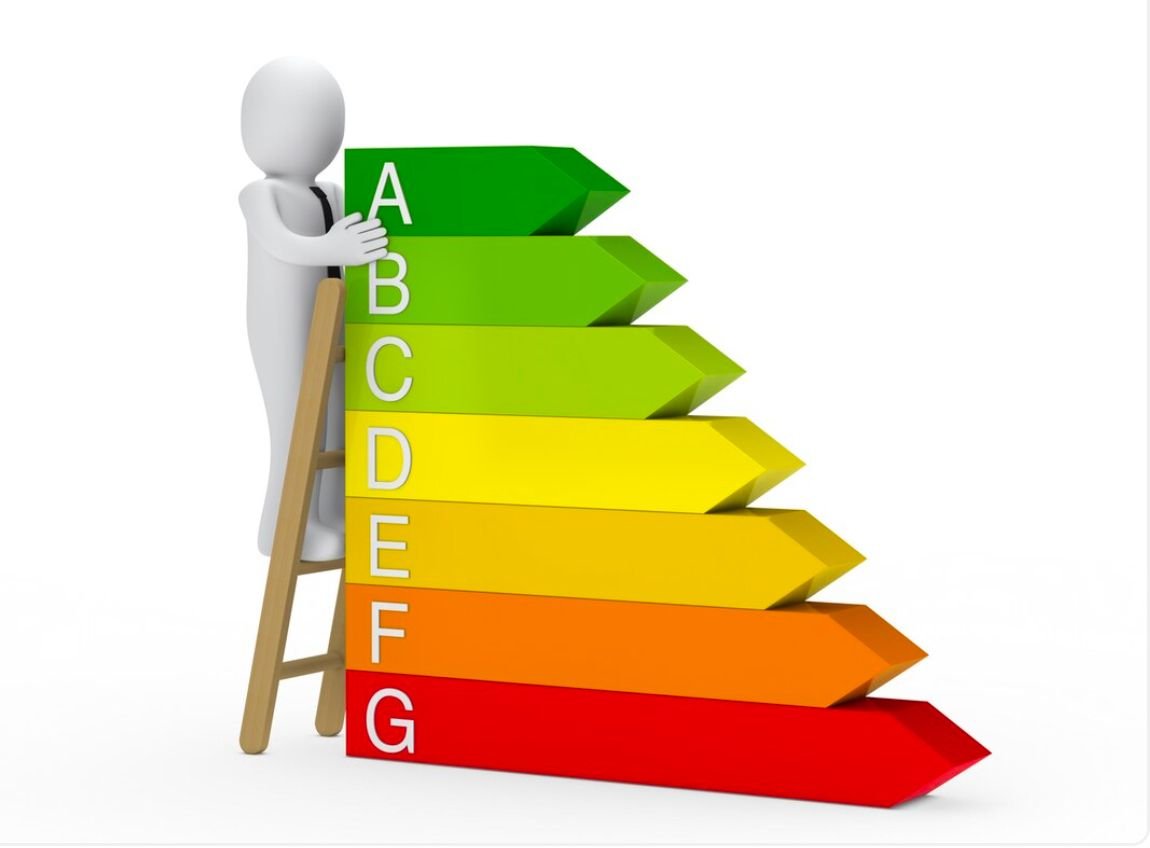
Since January 1, 2025, the die is cast: housing units classified as "energy sieves" due to their very poor energy performance are finally prohibited for rent.
Concretely, a landlord can no longer offer a G-rated DPE housing unit for rent in mainland France. In the overseas territories, this measure will only take effect on January 1, 2028.
Note: a G-rated unit under lease remains valid until expiry. However, without energy-efficient work, a new lease will no longer be possible.
🗓️ The schedule:
- DPEs conducted before July 1, 2021 become obsolete due to the new rules.
- As of January 1, 2025, co-ownerships with more than 50 units must compulsorily carry out a collective DPE (energy performance diagnosis).
- In 2025: prohibition of renting G-rated DPE housing units.
- In 2028: prohibition of renting F-rated DPE housing units.
- Starting in 2034: prohibition of renting E-rated DPE housing units.
💡 Mandatory energy audit for E-rated properties as of 2025
From January 1, 2025, owners of properties rated E on the Energy Performance Certificate (DPE) must conduct an energy audit before selling. This measure, introduced by the Climate and Resilience Law, aims to encourage energy renovations in homes in France. Discover the details of this obligation and its impact on the real estate market.
Ø What is an energy audit?
The energy audit is a thorough analysis of a property's energy performance. Unlike the DPE, which is limited to an overall diagnosis, the audit provides a concrete work plan to improve the energy rating.
Ø Which properties are subject to the energy audit?
As of January 1, 2025, the energy audit applies to all E-rated properties put up for sale, in addition to F and G-rated properties already subject to this requirement.
§ Individual houses
§ Monoproperty buildings. Condominiums are exempt from this requirement, but remain subject to other energy renovation rules.
Ø Why is this measure important?
The aim is to reduce these properties known as thermal sieves, as they are energy-intensive and harmful to the environment. By promoting energy renovation, this measure ensures:
§ Reduced energy bills for occupants.
§ Improved thermal comfort.
§ Contribution to reducing greenhouse gas emissions.
Ø What does the energy audit contain?
The energy audit consists of 3 steps:
1. Current diagnosis: Energy performance of the property.
2. Work proposals:
§ Costed scenarios in several stages.
§ Solutions to achieve a D class or less energy-intensive rating.
3. Available financial aid:
§ MaPrimeRénov'
§ Energy efficiency certificates (CEE)
Finally, to inform you online about your renovation aid opportunities, the simulator mesaidesreno.beta.gouv.fr helps you better understand what you are eligible for.